

Many homeowners dream of transforming their garage into a comfortable workshop, home gym, art studio, or even an extra living space. However, garages are typically unconditioned, making them sweltering in summer and freezing in winter. The solution? Installing an HVAC system. But can you put HVAC in a garage, and if so, what are the best practices for installation and performance?
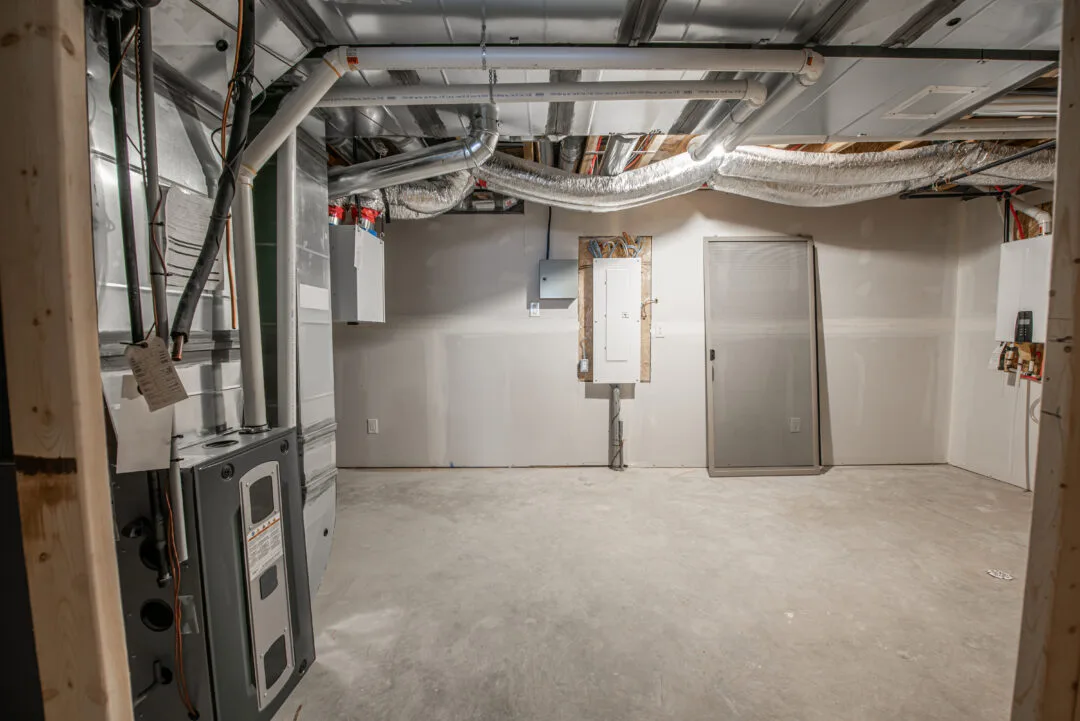
Pros and cons of garage HVAC installation
Adding heating and cooling to your garage comes with distinct advantages and challenges.
Pros:
- Enhanced Comfort and Usability: This is the primary benefit. A climate-controlled garage becomes a truly usable space year-round, expanding your home’s functional square footage for hobbies, work, or recreation.
- Protection for Stored Items: Extreme temperature fluctuations and humidity can damage tools, electronics, stored documents, and even vehicles. HVAC helps maintain stable conditions, preserving your belongings.
- Improved Air Quality: Proper ventilation and filtration can reduce dust, fumes (from cars or projects), and allergens, creating a healthier environment, especially if you work with chemicals or paints.
- Increased Home Value: A finished, climate-controlled garage can be a significant selling point, adding perceived and actual value to your property.
- Extended Usability: Maximize your home’s potential by turning your garage into a comfortable space, rather than one that’s avoided during peak seasons.
Cons:
- Cost: Installation can be a significant investment, especially for ductless mini-splits or extending central HVAC. Operating costs will also increase your energy bills.
- Insulation Requirements: An uninsulated garage is an energy black hole. Without proper insulation in walls, ceilings, and the garage door, any HVAC system will struggle to maintain temperature and waste enormous amounts of energy. This often means additional upfront costs for insulation upgrades.
- Carbon Monoxide & Safety Risks: Connecting a garage directly to your home’s central ductwork is a major safety hazard. Carbon monoxide (CO) from vehicle exhaust or other combustion sources in the garage could be drawn into your home, posing serious health risks. Building codes typically prohibit this connection for safety reasons.
- Ducting Challenges: Running new ductwork to an attached garage from a central system can be expensive and invasive, especially if there’s no basement or crawl space below.
- System Sizing: Your home’s central HVAC system is sized for the conditioned living space. Extending it to the garage can undersize the original system, leading to poor performance and efficiency issues throughout your entire home.
See more: Size HVAC guide
Temperature control vs. Energy consumption
Achieving comfortable temperatures in a garage while managing energy consumption requires careful planning.
- Insulation is Key: This cannot be stressed enough. Without adequate insulation in walls (including shared walls with the house), ceiling, and especially the large garage door, your HVAC unit will be constantly running, leading to exorbitant energy bills. Insulating the garage door, sealing cracks around windows and doors, and upgrading the access door to the house are crucial steps.
- Correct Sizing: An HVAC unit that’s too small won’t effectively cool or heat the garage, while an oversized unit will short-cycle, leading to uneven temperatures, poor dehumidification, and increased wear. A professional load calculation is essential.
- Zoned Control: For standalone units like mini-splits, the garage is its own zone, allowing you to turn it off or set back the temperature when the space isn’t in use, saving energy.
- Energy Efficiency Ratings: Look for units with high SEER (Seasonal Energy Efficiency Ratio) for cooling and HSPF (Heating Seasonal Performance Factor) for heating to ensure long-term energy savings.
Ducting challenges and condensation risks
Extending your home’s existing central HVAC ductwork to the garage presents specific challenges and risks.
- Safety Hazard (Carbon Monoxide): As mentioned, extending existing central HVAC ducts into a garage is generally prohibited by building codes due to the risk of drawing carbon monoxide, gasoline fumes, and other hazardous chemicals from the garage into the main living areas of your home. This is a critical safety concern.
- Pressure Imbalance: Garages are often not sealed as tightly as living spaces. Connecting them to a central system can create pressure imbalances, leading to “back-drafting” of combustion appliances (like water heaters or furnaces) in the main house, pulling dangerous gases indoors.
- System Overload: Your central HVAC system is sized for your conditioned living space. Adding the garage’s square footage significantly increases the load, often exceeding the system’s capacity. This leads to reduced efficiency, uneven temperatures throughout the house, and premature system failure.
- Condensation Risks in Ductwork: Ducts running through unconditioned spaces (like an attic leading to a garage) are prone to condensation if not properly sealed and insulated. When warm, humid air meets cold duct surfaces (from AC), moisture forms, which can lead to:
- Mold and Mildew Growth: Inside ductwork, leading to poor indoor air quality.
- Water Damage: Dripping onto garage contents, ceilings, or even electrical components.
- Reduced Efficiency: Wet insulation loses its effectiveness.
- Duct Installation Complexity: Running new, properly sized and sealed ductwork through walls, ceilings, or floors to a garage can be a complex, costly, and invasive construction project.
For these reasons, a dedicated HVAC system for the garage is almost always the recommended and safest approach.
Recommended HVAC types for garage use
Given the challenges of integrating a garage with central HVAC, specific standalone systems are generally preferred:
Ductless Mini-Split Systems (Heat Pumps):
- Why they’re best: This is overwhelmingly the top recommendation for garage climate control. They consist of an outdoor condenser and a compact indoor air handler, connected only by a small conduit (no extensive ductwork needed).
- Benefits: Highly energy-efficient (many are ENERGY STAR certified), provide both heating and cooling in one unit, offer zoned control (you only condition the garage when you need to), quiet operation, and are relatively quick to install.
- Considerations: Higher upfront cost than portable or window units. Requires professional installation.
Window AC Units (Cooling Only or with Heat):
- Why they’re an option: Affordable and relatively easy to install in a window.
- Benefits: Good for smaller garages or seasonal use where only cooling (or basic heating) is needed.
- Considerations: Blocks a window, can be noisy, less energy-efficient than mini-splits, and typically only provides cooling (or limited heat). Security can be a concern.
Through-the-Wall AC Units:
- Why they’re an option: Similar to window units but installed permanently into an exterior wall opening.
- Benefits: Frees up window space, more secure than window units.
- Considerations: Requires cutting a hole in the wall, typically cooling-only or limited heat.
Portable AC Units:
- Why they’re an option: No permanent installation, easy to move.
- Benefits: Quick and temporary solution for smaller spaces or occasional use.
- Cons: Least efficient, noisy, require an exhaust hose (usually through a window or drilled hole), take up floor space, and are generally less effective for sustained comfort.
MJ Pro Energy’s garage climate control solutions
At MJ Pro Energy, we specialize in transforming unconditioned garages into comfortable, functional spaces. We understand the unique challenges and critical safety considerations involved in garage HVAC and offer tailored solutions designed for optimal performance, safety, and energy efficiency.
- Comprehensive Assessment & Load Calculation: We begin with a thorough evaluation of your garage, considering its size, insulation levels (or lack thereof), window and door types, and your intended use for the space. This allows us to perform an accurate load calculation and recommend a system that is perfectly sized for your needs.
- Prioritizing Safety & Code Compliance: We strictly adhere to all building codes and safety regulations. We will never recommend extending your main home’s HVAC ductwork to your garage due to the inherent carbon monoxide risks. Our solutions focus on safe, dedicated systems for your garage.
- Expert Mini-Split Installation: As leaders in ductless technology, we highly recommend and expertly install high-efficiency ductless mini-split heat pump systems for most garage applications. These units offer:
- Precise Temperature Control: Enjoy comfortable heating and cooling year-round.
- Superior Energy Efficiency: Operate your garage HVAC only when needed, minimizing impact on your utility bills.
- Independent Zoning: The garage acts as its own climate zone, separate from your main living space.
- Quiet Operation & Discreet Design: Out-of-the-way installation that won’t disrupt your activities.
- Insulation & Sealing Recommendations: We can advise on crucial insulation upgrades for your garage walls, ceiling, and garage door, as well as proper sealing techniques. This foundational work is essential to maximize your HVAC system’s efficiency and your long-term savings.
- Ongoing Maintenance & Support: Our relationship doesn’t end after installation. We offer comprehensive maintenance services to ensure your garage HVAC system operates efficiently and reliably for years to come.
Don’t let an uncomfortable garage limit your home’s potential. Let MJ Pro Energy help you create the perfect climate-controlled space.
Ready to make your garage a comfortable extension of your home?
Contact MJ Pro Energy today for a personalized garage HVAC consultation!